This past year has been quite an experience. We've done a lot of different things, and learn about various topics. Thought, I wish we had gone deeper into each topic, and spent more time on each. We could have been more effective perhaps. But I've enjoyed this year, with all the different learning technics, and watching movies.
Next year there should be more oral presentations, but in groups. This year, we have had the chance to perform some; but only single. I think that with more oral presentations we would have developed our language more. As well as it would be easier when we're not presenting alone.That way we would maybe have had the chance to get to know eachother better as well :)
Anyway, this have been a great year!
fredag 10. juni 2011

fredag 6. mai 2011
Standard written English
Translate these sentences from "new english" to standard written english.
1. You didn't see him, it is?
You didn't see him, did you?
2. When you would like to go?
When would you like to go?
3. That man he is tall.
That man is tall.
4. Her jewelleries were stolen.
Her jewelry were stolen.
5. I am understanding it now.
I do understand it now.
6. They two very good friends.
The two of them are very good friends.
They are very good friends.
7. Sushila is extremely a lazy girl.
Sushila is an extremely lazy girl.
8. When you leaving?
When would you be leaving?
When are you leaving?
Pick four of the sentences and explain how it is different from standard written English.
They two very good friends - Here we can see that it is missing a verb, "are". As well as it sounds odd to say "they two".
When you leaving? - Again we can see that a verb is missing "are", or as I also have translated it "would + be".
Sushila is extremely a lazy girl. - Here the sentence structure is wrong: "a" should be in front of "extremely" so that it says: "is an extremely".
Her jewelleries were stolen. - In this sentence, the word "jewelry" is written in a plural tense, which does not exist.
1. You didn't see him, it is?
You didn't see him, did you?
2. When you would like to go?
When would you like to go?
3. That man he is tall.
That man is tall.
4. Her jewelleries were stolen.
Her jewelry were stolen.
5. I am understanding it now.
I do understand it now.
6. They two very good friends.
The two of them are very good friends.
They are very good friends.
7. Sushila is extremely a lazy girl.
Sushila is an extremely lazy girl.
8. When you leaving?
When would you be leaving?
When are you leaving?
Pick four of the sentences and explain how it is different from standard written English.
They two very good friends - Here we can see that it is missing a verb, "are". As well as it sounds odd to say "they two".
When you leaving? - Again we can see that a verb is missing "are", or as I also have translated it "would + be".
Sushila is extremely a lazy girl. - Here the sentence structure is wrong: "a" should be in front of "extremely" so that it says: "is an extremely".
Her jewelleries were stolen. - In this sentence, the word "jewelry" is written in a plural tense, which does not exist.
fredag 29. april 2011
Losotho visit
Today, we were so lucky to have a visitor from Lesotho in our class. Moliehi Sekese, who is a teacher in Lesotho told us about the circumstances in Lesotho and compared them to ours. Lesotho is one of the poorest countries in the world, and the children in her school are far from as lucky as we are; they only have two computers to use for 700 students, and one teacher to teach a group of 100 students. Their classrooms are only three quarters the size of the classrooms we got, and we're only about 25-30 students in one classroom at the time. Sekese told us that they're in a lack of tables, chairs and books. When she teaches a class she has to write down everything for her, as well as their assignments. There is no possibility for the students to do work by them selves; they're dependent of their teacher.
Many of the children have to worry about things as if they got enough food, if they have anything to wear ect. There is few places with electricity and running water. They have to walk very far to get their water. I wrote a little poem about my associations to this.
Many of the children have to worry about things as if they got enough food, if they have anything to wear ect. There is few places with electricity and running water. They have to walk very far to get their water. I wrote a little poem about my associations to this.
Far far away
Too far to really understand
Just imagine
A crying child
An empty stomach
A closed door
The sun is heating
The throat is dry
The people walk far far
Far far in the heat
To the nearest waterhole
Carrying buckets on their heads
Small children
Only hope for a better life
Is to get an education
Schools without electricity
Without pencils and books
Depending on their teacher
Children going home
Don't knowing if there will be dinner
Far far in the heat
To the nearest waterhole
Carrying buckets on their heads
Small children
Only hope for a better life
Is to get an education
Schools without electricity
Without pencils and books
Depending on their teacher
Children going home
Don't knowing if there will be dinner
Will mom survive today?
Diseases fighting the population
But there is a hope in medication
A hope in plants
So they plant
They make their own botanic gardens
Where hope will grow
Poem by me
Diseases fighting the population
But there is a hope in medication
A hope in plants
So they plant
They make their own botanic gardens
Where hope will grow
Poem by me
torsdag 28. april 2011
Double entry: The Devil and Miss Prym
The Devil and Miss Prym is written by Paulo Coelho and is about Chantal, a village orphan in Viscos and a Stranger that visits with a task and a reward.

Conflict.
"What?"
Her question came out like a yell.
"Exactly what I said. I want them to commit a murder."
I chose just a few lines for the theme "conflict" because I think these three lines are all that's needed to illustrate the story's conflict. The Stranger is telling Chantal about his plan; if the people of Viscos commit a murder within seven days they will me rewarded with ten golden bars that would make the village a wealthy village. None of the inhabitants will need to work for the next thirteen years. And the Stranger will get the conclusion: we are all evil. But if a murder is now committed he will conclude that we are all good, and if Chantal's steals the one gold bar he has shown her where is buried, he will conclude there are both evil and good. Chantal is given the task to either tell the inhabitants of Viscos about the offer, or he will in the end of the week and then, if they decide to kill someone, he says; "it would probably be you". She could also run away with the one gold bar.
These lines illustrate the paragraph because it tells us about the main conflict of the story: "will the inhabitants kill someone?" And that's why these lines were chosen.
Self-realization and Relationship.
She smiled to herself, glanced to her left and blew a discreet kiss. She was not a useless woman; she had something important to do: to save the place where she has been born, even though she had no idea as yet what steps she should take.
The "she" person in this paragraph is Berta, the old widow living in Viscons. She can "see" people, and she can se the evil by the Stranger's side, and the good and evil fighting in Chantal after she have met the Stranger. This paragraph goes under both relationship and self-realization. Relationship because it illustrates Berta's love for the village and that she is very bonded to Viscos. Also, in this chapter we get to know more about Berta's husband.
But it goes under self-realization because of two reasons. One: In this chapter, we also get to learn about why Berta can see people and how she realized her purpose in life after her husband died and why she is the woman she is today.
Reason two is that Berta helps Chantal realize something important: who her enemy really is and who she is "hunting". This realization sets the story off in new direction.
Picture link
onsdag 20. april 2011
The Devil and Miss Prym
So, after a lot of back and forth I had to chose another book to read in English class. Of course, I am going to read Emma, but not now. Emma is a book that deserves more attention than I got time to use on reading right now. Besides my "job" as a book critic/reviewer (I am not sure which word would be right to use..) I don't get much time for other reading. After all, I have other school work besides my job and social life ;-) So I had to find a shorter book this time, and ended up with "The Devil and Miss Prym" by Paulo Coelho. I wanted to read "The Alchemist", also by Coelho, but it was sold out everywhere.
I started reading the book today and it caught my attention after just a few pages. Which is a good sign! Soon there will be a post with "double entry journal" about this book. ;) Stay tuned!
I started reading the book today and it caught my attention after just a few pages. Which is a good sign! Soon there will be a post with "double entry journal" about this book. ;) Stay tuned!
fredag 25. mars 2011
The Varieties of English
There are many varies of English in the world today which might sound odd, but considering English is a global language this is not that weird at all. With all these countries all over the world; in Asia, Australia, America and Europe and in Africa, and all with their different languages, dialects and accents there's no wonder how their ways of speaking English turned out differently.
The most known English varieties that we know well are, perhaps, American English, British English and Australian English. But in this entry, I am going to write about three more kinds of english; Singapore English, Caribbean English and Hinglish.
Where Singapore English and Caribbean English descend from are quite obvious, but Hinglish might be a little bit trickier for some to figure out? Hinglish is a blending of the two words "Hindi" and "English". Hindi is the official language in India, besides English. Hinglish is most common in the Urban and semi-urban centers of the states in India where Hindi is spoken, and the Hinglish speakers are assumed by some to soon outnumber the native English speakers.

The columnist Devyani Chaubal was the first author to use Hinglish, and after her Shobhaa De who used Hinglish elements in her books and columns in the Indian magazine Stardust. And through the years, Hindlish has been used in advertising, for example in slogans. An example is the Pepsi commercials; "Yehi hai right choice, Baby" which means "this is the right choice, Baby". There is also written a book called "The Queen's Hinglish: How to speak Pukka".
Hinglish is also affecting the English spoken in England because people adapts words and expressions used by the Indian immigrants. Kind of like the "Kebab Norwegian" language in Norway which is Norwegian influenced with words and expressions from other languages.
But back to the Singapore English. This is a dialect of the English language used in Singapore, influenced by both Chinese and Malay (Malaysia). The Singapore English is emerging and the the difference between the English of the various ethnic groups in Singapore is mainly the intonation.
David Deterding claims that it is fully possible to sound Singaporean and still be easily understood in the rest of the world. Considering this I would guess that the Singaporean language havn't influenced the Singapore English much.
The Caribbean English is a broad term for the various dialects of the English language spoken in the Caribbean. The daily use of English in the Caribbean includes a different set of pronouns, for example; me/meh/mi, you/yuh, we/wi/alawe and dem/den/deh for "them". They often skip the "th" in words
The Caribbean English is also influenced by other languages, as Irish and Scottish. For example the Jamaican English: "Whierr iz dath bwoy?" Also from Bahamas their tongue is similar to the accents of south western England and Wales: "Wey iz dat boy?".
I think it's curious that there are so many languages, so many varieties of English with influences and accents, and still, most of them are understandable. Don't you? Letting the English language getting influenced by other languages makes us richer.
Gran Torino
Today we saw Gran Torino in our english class. Gran Torino is a movie directed by Clint Eastwood from 2008. The movie is about Walt Kowalski who fought in the Korean war and is played by the director, Clint Eastwood. Walt is a grumpy old man who dislikes(as it seems) everyone, especially Asians, and is not exactly happy when a Hmong family moves in next door. The Hmong people are from Laos, China and Thailand. Two of the family members that moves in are a tough girl called Sue and her brother Thao. While Sue is tough, Thao is quite the coward. He is quiet and insecure.
Because of various incidents, Walt and Thao and Walt and Sue gets to know one and each other and relationships are built.
The movie consists a lot of racism between ethnic groups, especially between "white" and Asians. From my opinion Hollywood often portray people of different races as enemies and there is often a lot of violence, guns and swearing. Kind of mafia like with threatening of families ect. I think Hollywood often overdo it when making movies.. At least so I hope.
It can be really hard to be an immigrant, because you need to be able to become a part of the new society and you're also dependent to be accepted by the new society. It is also very important that you do an effort yourself; to learn the new language for example. Also you have to accept the new society and their traditions and morals.

Because of various incidents, Walt and Thao and Walt and Sue gets to know one and each other and relationships are built.
The movie consists a lot of racism between ethnic groups, especially between "white" and Asians. From my opinion Hollywood often portray people of different races as enemies and there is often a lot of violence, guns and swearing. Kind of mafia like with threatening of families ect. I think Hollywood often overdo it when making movies.. At least so I hope.
It can be really hard to be an immigrant, because you need to be able to become a part of the new society and you're also dependent to be accepted by the new society. It is also very important that you do an effort yourself; to learn the new language for example. Also you have to accept the new society and their traditions and morals.

torsdag 10. mars 2011
A Jane Austin novel
For our English class, I am reading Emma by Jane Austin. In this blog entry, I will write about what I think about this book(as far as I've read).
My expectations for the book were few, but I had heard it wasn't actually easy reading. At the time it was written, people had another way of writing than we have today. The book contains a lot of descriptions and "unimportant" information about various characters. The first three chapters rarely contains any dialogs, which makes the book taught to read because of it's lack of, well, action. The sentences are very long, some 7 lines with letter size 9-8. The language is very formal and deep. the first chapters have still not managed to engage me much, and I'm waiting for the story to really begin.
I am not sure about the time the story takes place, but the place is somewhere in a two hours diameter from London. Or so I have understood.
In the book, we meets Emma, who lives alone with her father. The books starts with describing the character gallery in the book, we get to know about a whole lot of people that Emma knows. Quite boring information, but if you've read Anna Karenina, this is no worse.
My expectations for the book were few, but I had heard it wasn't actually easy reading. At the time it was written, people had another way of writing than we have today. The book contains a lot of descriptions and "unimportant" information about various characters. The first three chapters rarely contains any dialogs, which makes the book taught to read because of it's lack of, well, action. The sentences are very long, some 7 lines with letter size 9-8. The language is very formal and deep. the first chapters have still not managed to engage me much, and I'm waiting for the story to really begin.
I am not sure about the time the story takes place, but the place is somewhere in a two hours diameter from London. Or so I have understood.
In the book, we meets Emma, who lives alone with her father. The books starts with describing the character gallery in the book, we get to know about a whole lot of people that Emma knows. Quite boring information, but if you've read Anna Karenina, this is no worse.
fredag 4. februar 2011
Trusting information on the internet
When searching the internet for information it is important to be sure your information is trustworthy. For example if you search for a keyword and you end up on http://uncyclopedia.wikia.com you are goofed. This link can look like Wikipedia, but it is not.
Also there is a discussion about whether Wikipedia is to be trusted or not. It is. Wikipedia's reputation is too important for this encyclopedia to be ruined. Yes, everyone can write an article there, but if your article is full of bullshit or even just one mistake, it will be deleted within a few minutes. Therefore wiki is a page you can trust.
But how do you know if you can trust a page? First of all, how is the text written? Informal, formal, passive or partial? Second, have you heard of this page before? Does it have a reputation? Who is the webmaster and what contact information does the page have? Is it a typical homemade webpage with bad graphics or an advanced webpage? Think and be critical!
It is very important to know who have written the article and on which basis? Because facts and conclusions in a partial article can rarely be used for own writing.
My best tips is to stick with the pages you know, like Wikipedia or as I often use the Norwegian online encyclopedia. And if I can't find what I need on any of these I usually use the local library because there you can always find something and there's always books you can trust.
Also there is a discussion about whether Wikipedia is to be trusted or not. It is. Wikipedia's reputation is too important for this encyclopedia to be ruined. Yes, everyone can write an article there, but if your article is full of bullshit or even just one mistake, it will be deleted within a few minutes. Therefore wiki is a page you can trust.
But how do you know if you can trust a page? First of all, how is the text written? Informal, formal, passive or partial? Second, have you heard of this page before? Does it have a reputation? Who is the webmaster and what contact information does the page have? Is it a typical homemade webpage with bad graphics or an advanced webpage? Think and be critical!
It is very important to know who have written the article and on which basis? Because facts and conclusions in a partial article can rarely be used for own writing.
My best tips is to stick with the pages you know, like Wikipedia or as I often use the Norwegian online encyclopedia. And if I can't find what I need on any of these I usually use the local library because there you can always find something and there's always books you can trust.
Megacities

Today's theme in English class is megacities. First of all, what is a megacity? To become a megacity, there has to be more than 10 million inhabitants. In our English book, that we use in class, there is a text about megacities including a quote by Kofi Annan who where the UN secretary-general. Kofi Annan speaks about the problem about people moving from the country and into the cities. The rural population is decreasing while the urban population is increasing. Cities are having challenges accommodating new inhabitants.
Beneath the quote there are three statics. The first one is illustrating the percentage of the growth of the urban population . As we can read from these diagrams, in 1800 there was a growth of 2% which have increased to 47% percent in 2000. The diagram is also foreseeing the percent in 2015 and 2030. In 2015 it's foreseen that the percent of urban population growth in the world has increased to 52% while it's 60 percent in 2030. That's a huge increase.
 In the next diagram we're shown the statics of the rural and urban population percent in different regions in the world. We can see the population statics in 1995 and 2015, a twenty year difference. As we can read from this diagram, the region with the widest rural population is Asia with 2249 million people in 1995 and it's foreseen that this will increase to 2380 in 2015. In 1995 they had an urban population corresponding 1180 million people and 1970 by 2015. As we can see, both the urban and rural population is foreseen to increase. After Asia with the largest rural population there is Africa, and then Europe. In Europe the urban population were 518 million people in 1995 and foreseen to increase to 532 million in 2015, while the rural population which were 209 million will decrease to 188 million people. After Europe there is South America and on top, with the lowest rural population, and urban population matching Africa's there is North America. In 1995 the rural population were only containing of 67 million people and the urban had 231 million people(Africa: 247mill.) In 2015 it's foreseen for the rural population to have decreased to 59 million and the urban to have increased to 301 million people.
What we can see from this diagram is that the rural population in the developing countries is increasing as well as the urban is, while in Europe and America the urban population is increasing and the rural decreases.
This is of course a global challenge because the developing countries has the biggest population increase and then will get, as Kofi Annan said, problems hosting their new habitants, both immigrants and natives.
The third static is showing a rank of the world's biggest megacities. The three biggest cities is Tokyo with 33.4 million people, New York with 24.1 million and Mexico City with 21.7 million people.

torsdag 20. januar 2011
Multicultural USA and Great Britain
I have decided to discuss and compare the US and the UK.
The United States and United Kingdom are both influenced with a multicultural population and have become pretty much multicultural societies. They're societies are influenced with a variety of cultures, religions, races and political views and values. Oblivious this would cause a great deal of both misunderstandings and disagreement.
In United Kingdom, or Britain you may say, the religious hate crimes have rose as much as 600% since the bomb attacks in 2005. And these crimes are mostly against Muslims.
Britain's policy of multiculturalism is as following: people of different cultures are allowed to settle without expecting them to integrate into society.
Could this be a problem? If people continuously immigration but do not integrate , what would happen to the society? In a society I think it is extremely important to have some mostly the same values and be able to understand and accept and speak the same language to make the society work and for people to be able to cooperate.
Historically the immigrants in Britain have come from Ireland, India, Pakistan and the Caribbean, but today the immigrants more often are younger and with more various backgrounds. Today immigration today is more often motivated by economic factors, while family was a bigger factor before. This makes people from more far off places and different places immigrate. When family was the factor, people immigrated because of solidarity with family.
Today Britain is one of the most culturally diverse societies in the world, sharing the statics with the US, a country mainly consisting of immigrants. There is immigrants from all over the world searching for a way to achieve the American dream. USA do not think of multiculturalism as a conflict maker, but as a source of strength and renewal. In America the immigrants who wants citizenship needs to study American history ect.

This is a difference between England and the US after my impression after reading about these two countries; In England making people integrate to the society is a problem while in the USA, if you want citizenship you're "forced" to integrate. Thought, in the US there is a problem with immigrants not assimilating, notably the Mexican-American. In many schools the "Pledge of Allegiance" is in control and some doesn't even fly the American flag. Also in America there are own societies containing of multicultural people, for example China Town and the Muslims that had their own little society like we read about in the book Kite Runner.
Also Hispanics can do business in Spanish, cote in Spanish and take driver license exam in Spanish. Also there are own schools for different multicultural groups.
The most common interracial categories in the US are white and black, white and Asian, white and American Indian or Alaska native and white and mainly Latinos. I think the racism is the US and Britain is very much at the same level.
lørdag 18. desember 2010
The lion, the witch and the wardrobe.
Today in English class we watched the movie Narnia, the Lion, the witch and the wardrobe. I am sure you all have heard of this movie and perhaps seen it?

The film we saw is about the siblings Lucy, Edmund, Susan and Peter. It's war, and the four of them have to leave with a friend of the family out in the countryside, away from the bombs and danger in the city. One day they discover a wardrobe with fur coats. But this is far from a normal wardrobe and inside they all discover a new world; Narnia and that they're all a part of a prophecy. I don't really want to spoil more for you.
The movie is the screen version of the book with the same name written by C.S. Lewis. He has written seven books about Narnia. Lewis himself experienced the second world war this fact shows in the movies. The wars are very well made and filmed and the effects used are great. Also the film music (by Harry Gregson-Williams) is great and really getting you into the right mood.

Lewis' works have been translated into more than 30 languages and have sold millions of copies.
So you're interested in fantasy/was movies with queens and kings, fables and adventure this is probably a movie you like. And soon the third movie will be shown at cinemas in
Norway!
http://www.filmweb.no/bilder/multimedia/archive/00091/Legenden_om_Narnia_-_91892a.jpg
Click the photos to see the source.
fredag 3. desember 2010
a Christmas wish
In English class we are attending a December contest. Link.
So I chose task 5: [...] write a poem. And so I did. My poem is written with rhymes and is about peace, Christmas evening, family and Jesus.
The windows are covered with hoar frost
From the radio, Christmas carols fills the air
In the oven the turkey is almost done roast
It's the season for love, joy and care
We will celebrate tonight the evening
When there was born a little baby boy
The son of God came to us without screaming
A king they said, but this did Herodes annoy
He would kill Jesus, afraid of losing his role
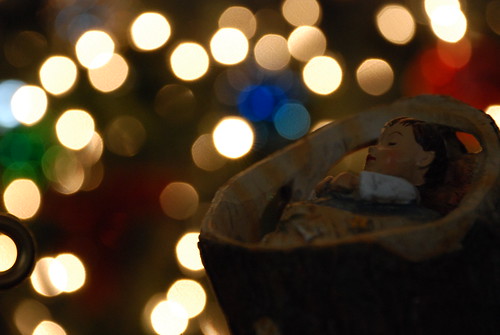 But Josef foresaw this in a dream
 And escaped to saved his wife and boy
So together they all ran away in the moonbeam
They had to escape to save their own life
So many people have been doing the same
Running away with both housebound and wife
People running away in fear is for mankind a shame
So this night I to the holy spirit pray
I pray to the son, and his father in heaven
That our world will be peaceful and safe one day
And for all our sins to be forgiven
We will celebrate tonight the evening
The evening for love, joy and care
All day I have been washing and arranging
And polished the silver shining clear
All that's missing this December night is some company
They would soon be here with me
The guests are dear friends and family
When they come we'll walk around the tree
The tall and green Christmas tree
Shining pretty and with lots of presents underneath
A knock on the door, could that my guests be?
Come in my dearest family, into the heat
Warmth and laugher makes a wonderful atmosphere
We kiss under the mistletoe and think of how lucky we are
And I wish my words will be heard somewhere
As I make a wish upon the shining Christmas star
For a safer and peaceful world.
fredag 26. november 2010
Japan

I worked together with Heidi Emilie and Eline while learning about Japanese culture.We decided to watch some japanese anime to learn about the culture. The culture is reflected in the anime, though it's very overdone. However, we watched some episodes of a comedian anime. Afterwards we discussed what we had seen and what we thought was different in the japanese culture from the european. For example, we thought that homosexuality is much less a tabu in Japan than in Europe. Neither is cross-dressing.
Also the Japanese seems more straight forward and not as "cold" as europeans. They show their feelings much clearer than we do through the way they talk and body language. Also I have the impression that japanese girls are very girly. They're very interested in hair dues and nail design. After all japanese(and Asia) is quite famous for their imaginative nail designs. The west has recently started to adopt this trend, though it's not a big hit yet.
 Also the Japanese has a quite unique fashion culture. Ever heard of Lolita for example? But also, the japanese are very found of the western fashion.
Also the japanese food is very different from the european. We have already adopted the sushi, but there's still yet to come! Pocky is one example. Really tasty Japanese candy which can be bought in a few "foreigner" stores in Norway.
In Japan they also have the Sakura season, which is when the cherry trees blossom. This is a very popular time to visit Japan and therefore also quite expensive. But very beautiful! They also have the hot springs which are very different from the western standard spa. And the school uniform is very common as well.
 So all summed up, the japanese has quite a different culture from us europeans. I know someone who is studying there right now, and she wrote on her blog that the first time she arrived in Japan she was shocked. It was so different and weird.
I think the way we worked on this was great, and I would not have chosen any other way! :)
Pictures:
[link1] [link2] [link3]
fredag 12. november 2010
Working abroad

When it comes to working in the US and in Britain I think one of the main differences are that they are more "open" and outgoing. They are less formal and I also think Britain is more strict. Of course this varies from where you work. Especially I think you have to be more formal with your boss in Britain than in the US.
I also think there's more opportunities in the US, and harder to earn good money in Britain.
torsdag 11. november 2010
equalities and differences

We took our first steps on the
same lawn in the same yard.
same lawn in the same yard.
And, under the same roof,
we spoke our first words.
we spoke our first words.
Mine was Baba. His was Amir. My name.
This is the paragraph I though was the best one. I think this paragraph illustrates the friendship between Hassan and Amir and shows how tight they are bonded. And I think that’s the main topic of the story, “friendship”.
I thought this small paragraph told so much about the whole story.
It gives a hint about how tight they actually are bonded, which we will learn later in the story. But it also illustrates their different views of their friendship, and it illustrates their roles in the story. Hassan, the naïve Hazara that never think badly about anyone, while Amir was a spoiled Pashtun with strong and clear meanings, but too much of a coward to express them. This paragraph could actually fit in most of the “themes” because it also shows the conflict between the two boys and the friendship. I think this is one of the strongest paragraphs in the book.
It gives us a hint about what the following pages will be about, and how the story will turn out.
I can't remember hearing this "quote" in the movie, which is sad since it's so good. But on the other hand it does not really matter too much because this paragraph is shown through the story, since the paragraph tells the story, it's not very important to include in the movie where the story is told anyway.
Link bilde
Link bilde
fredag 1. oktober 2010
The Kite Runner - entry 1

I have been sick and very busy lately so I haven't got much time for reading, but as far as I have come, I really like the book. My favorite part until now must be on page ten, where Ali tells the boys about their nurse and her lovely singing voice and he sings for the boys:
On a high mountain I stood,
And cried the name of Ali, Lion of God.
O Ali, Lion of God, King of Men,
Bring joy to out sorrowful hearts.
The the paragraph continuos:
"Then he would remind us that there was a brotherhood between people who had fed from the same breast, a kinship that not even time could break.
Hassan and I fed from the same breasts. We took our first steps on the same lawn in the same yard. And, under the same roof, we spoke our first words.
Mine was Baba.
His was Amir. My name.
I think this paragraph shows very clearly the bond between the two boys and that the bond is to strong to ever be broken. Thats why I really liked it. It tells us something about the rest of the story, that it will be about those boys, their relationship and their destinies.
Bilde link
tirsdag 14. september 2010
Say "no" to yourself.

I know it takes me almost an hour extra to do my homework if I’m logged on to Facebook, Skype ect. But that it effects my grades and the result of my homework? Never thought of that… So what to do to avoid dropping grades?
You could disconnect your computer from the network, and that way force yourself out of distraction. But what if you need internet to do your homework? That’s trickier, because even though you decide not to log on to Facebook, you probably will be tempted to log on. But my advice is to just decide to focus on homework, force yourself to avoid Facebook, msn, Skype ect.
Be strong and don't let social communities decide your grades.
It's better to reward yourself after the homework is done with some socialization on Facebook.
Link bilde
torsdag 2. september 2010
Global Challenge
"What you think might be an important global challenge to work with in class?"

I got this question from my teacher. And I though a global challenge associated with what we are learning in our English class, would be the challenge to understand and respect people from other countries, cultures and believes. That's an important challenge in the world today and an important reason to the wars and conflicts in the world today. I believe if we learned more about each other, both objective (facts about religious beliefs and cultures) learning and subjective (peoples personal opinions) we would also understand better, and hopefully be more respectful.
You might ask, how is this related to our class? Well, we are supposed to make friends in other countries. And it is easy to misunderstand each other, especially since our ways of expressing ourselves and our views on things might are a bit different. I often see that Norwegians write and speak English differently than others might, and that can cause misunderstandings.
So that's what I think would might be a global challenge for us to work on. To understand others was of living.
Erin B. - one person can make a difference
Warning. Spoiler!
Last friday we watched a movie called Erin B, thought we didn't get to see the end before it was time for us to start the weekend(but we will finish it tomorrow!). First I was a bit skeptical... another movie about a poor woman with lots of kids and no education trying to make it for a living.. if you have seen one of those movies, you have seen all of them. At least that's what I think. But it turned out to be a good movie! Predictable, but still not a waste of time :) Erin is a single mother with three young children, no job and no education. She tries to get every job she can find, and in the end she gets a job at her lawyers office(which she nearly forces him to get). She does her best but her colleagues are not very fan of her or the way she dresses and they does not really make her job easier! But then, one day she discovers something odd among the files at the office, that she wants to dig deeper into and that's where the action really begins! It turns out to be a big case! But I won't spoil why.. (watch the movie)

This movie shows us the inside story of a struggling woman, and how one person can make a difference. Erin is observant and discovers something huge, and because of her being stubborn she manage to help and make a difference for lots of people. This also helps her own personal situation. One person really can make difference. Even just smile and say hi to a stranger passing by, might make that stranger happy. I think we underestimates our selves. Many people don't think their actions alone can make a difference, but they can!
EDIT.
At Friday we finished watching the movie about Erin. I thought it was a very good movie, with a good moral and message. "Do to others what you want in return"
The movie was also very funny. The whole class sat laughing at the end when Erin gets her paycheck.
Worth seeing :)
Bilde link
Abonner på:
Innlegg (Atom)